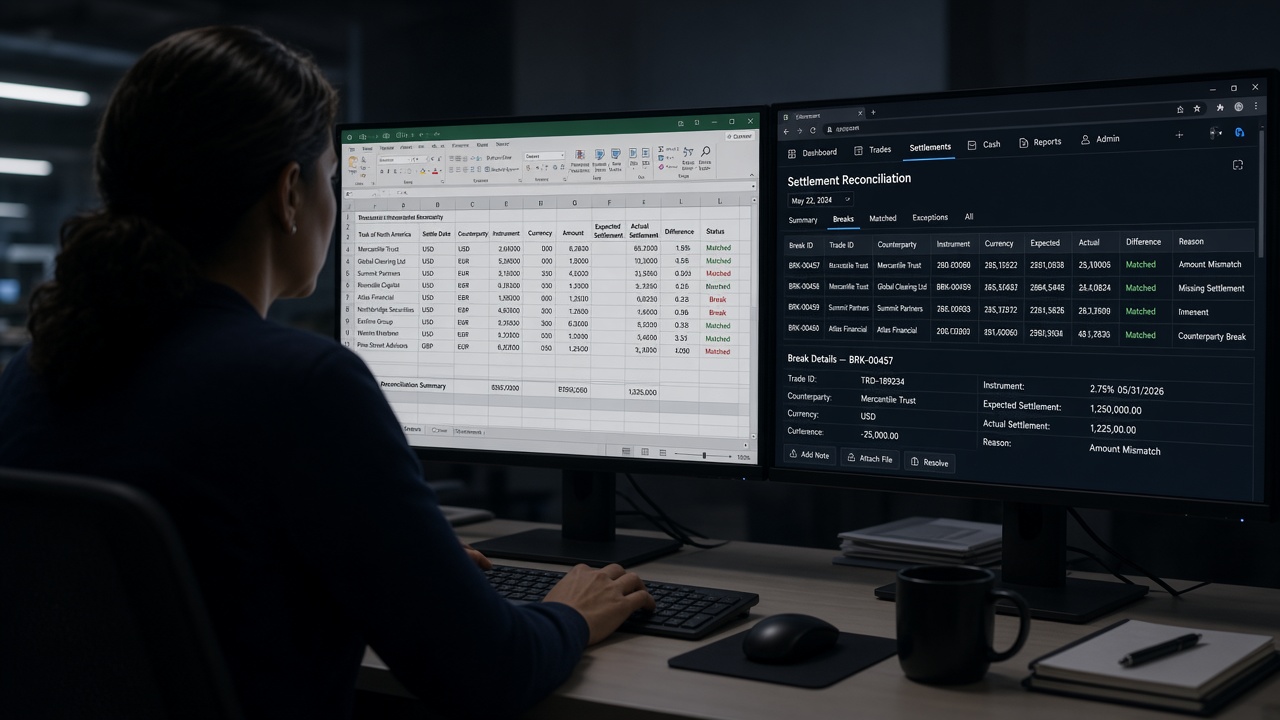
Next Gen System
Case 04 Chicago INSURANCE · DATA EXTRACTION
Claims Packet Data Extraction at Scale
Document extraction that turns photos and PDFs into structured claim fields with review queues.
01 — Context
The Client’s Story
FNOL packets arrived as photo dumps and multi-page PDFs. Adjusters re-keyed the same fields for hours before a claim was even open—loss date, location, parties, and policy identifiers typed from blurry phone images.
Incomplete packets bounced from the downstream system, sending adjusters back into the same files. Cycle time suffered before investigation could start.
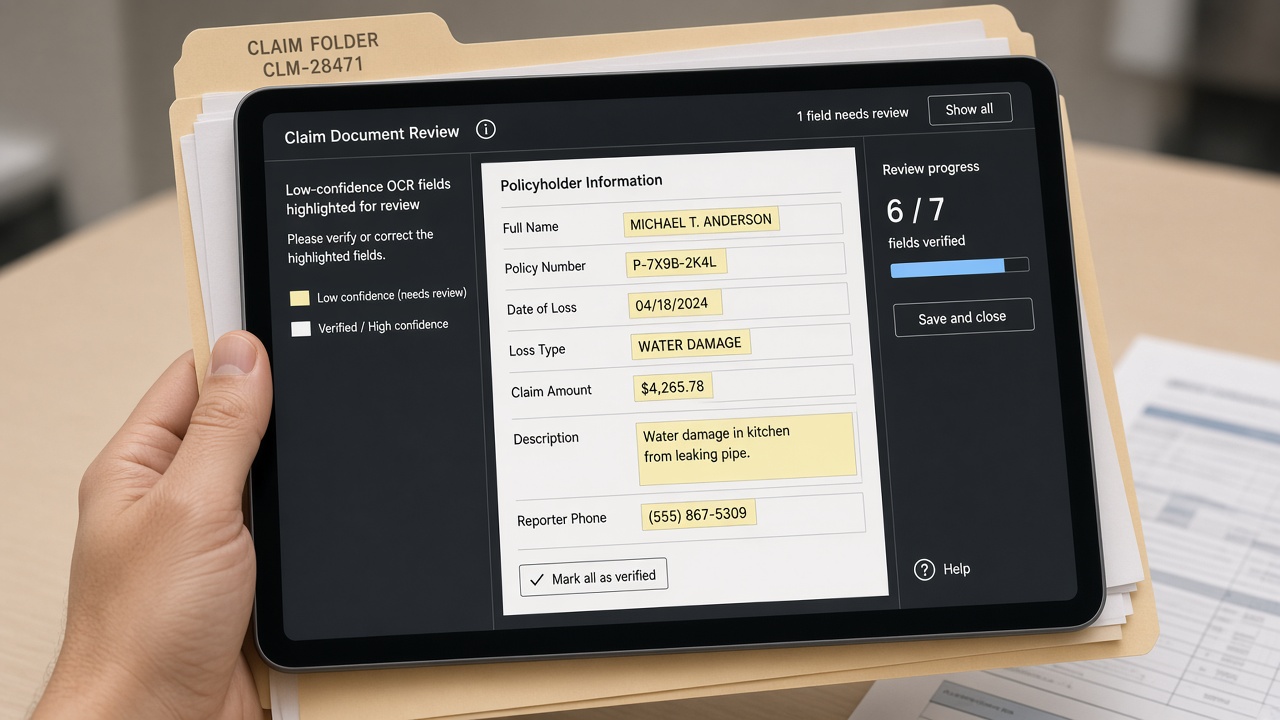
The intake team needed structured fields with confidence scores—and a review queue that only showed uncertain values—so humans spent time on judgment, not transcription.
02 — Ambition
Objectives
Extract loss facts into the claim schema with confidence scores, so high-confidence fields flow straight into intake.
Flag low-confidence fields for human review only, instead of forcing a full packet re-key every time.
Cut first-notice cycle time without sacrificing the accuracy the downstream system demands.
03 — Friction
Challenges
Mobile uploads arrived with mixed image quality, glare, and cropped pages. OCR alone was not enough.
Policy-specific field vocabularies varied by product line, so a generic extractor would miss required keys.
The downstream system rejected incomplete packets hard—partial automation that failed silently would create more rework than it saved.
04 — Approach
Solution
Data extraction pipelines classify packet type, run OCR and entity extraction, then map into the carrier intake API with confidence attached to each field.
A review queue shows only uncertain fields. Adjuster corrections feed weekly accuracy improvements without rebuilding the whole pipeline.
Monitoring tracks rejection rates from the downstream system so schema drift surfaces early—before a quiet week of bad packets piles up.
05 — Outcomes
Results
Standard auto and property packets opened faster, re-keying hours fell, and structured data became clean enough to feed later process automation.
- Material drop in re-keying hours per claim.
- Faster time-to-open on standard auto and property packets.
- Cleaner structured data for downstream process automation.
06 — Forward
What’s Next
Add OpenAI-assisted field normalization where layouts keep shifting, with the same confidence thresholds and human review gate already in production.
Ready to ship something similar?
We’ll map scope, risks, and a first production slice in one working session.