Next Gen System
Case 05 Detroit MANUFACTURING · PROCESS AUTOMATION
Plant Floor Process Automation
Workflow automation that routes exceptions, updates systems of record, and shortens cycle time.
01 — Context
The Client’s Story
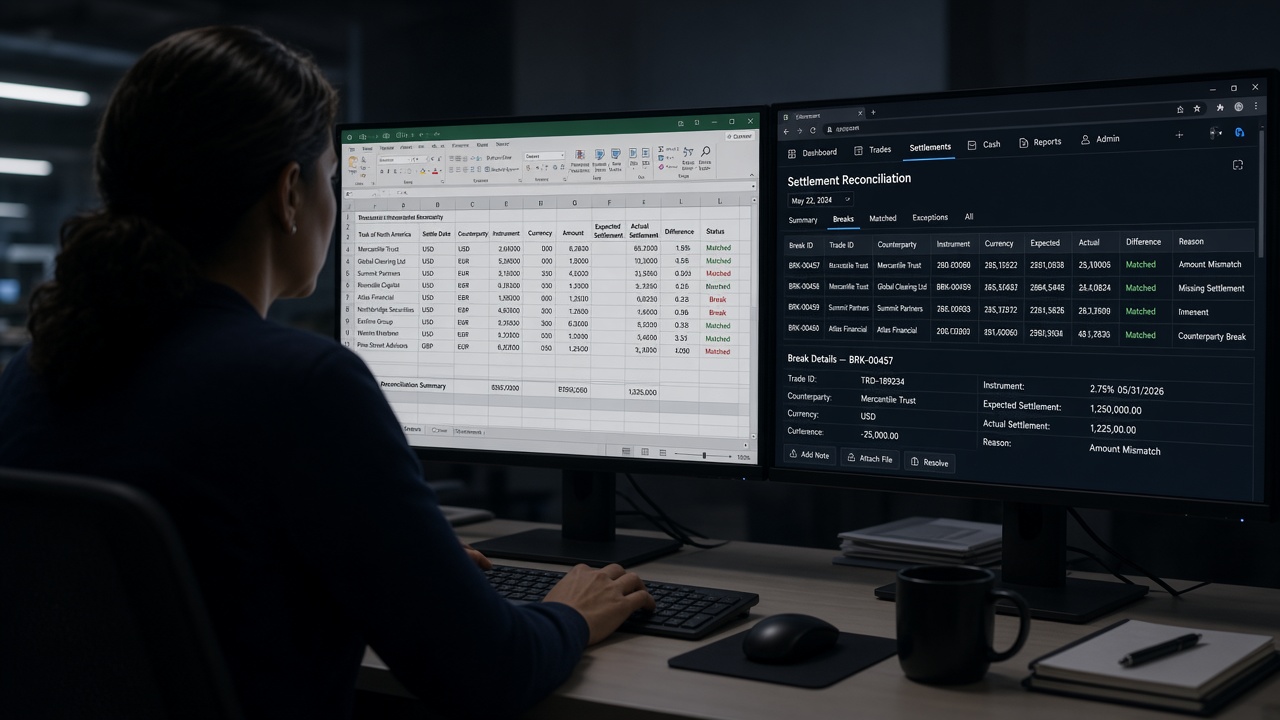
Quality and maintenance tickets bounced across email, whiteboards, and three plant systems. Cycle time for stop-the-line follow-ups depended on who was on shift—and status was rarely trustworthy when leadership asked for a number.
Shift handoffs dropped ownership. A ticket could look “in progress” in one tool while the line already needed a different owner.
Ops wanted automation that moved intake, routing, and status updates without inventing a fourth system of record—and without removing humans from true exceptions.
02 — Ambition
Objectives
Automate intake, routing, and status updates for priority plant workflows so the critical path does not wait on inbox triage.
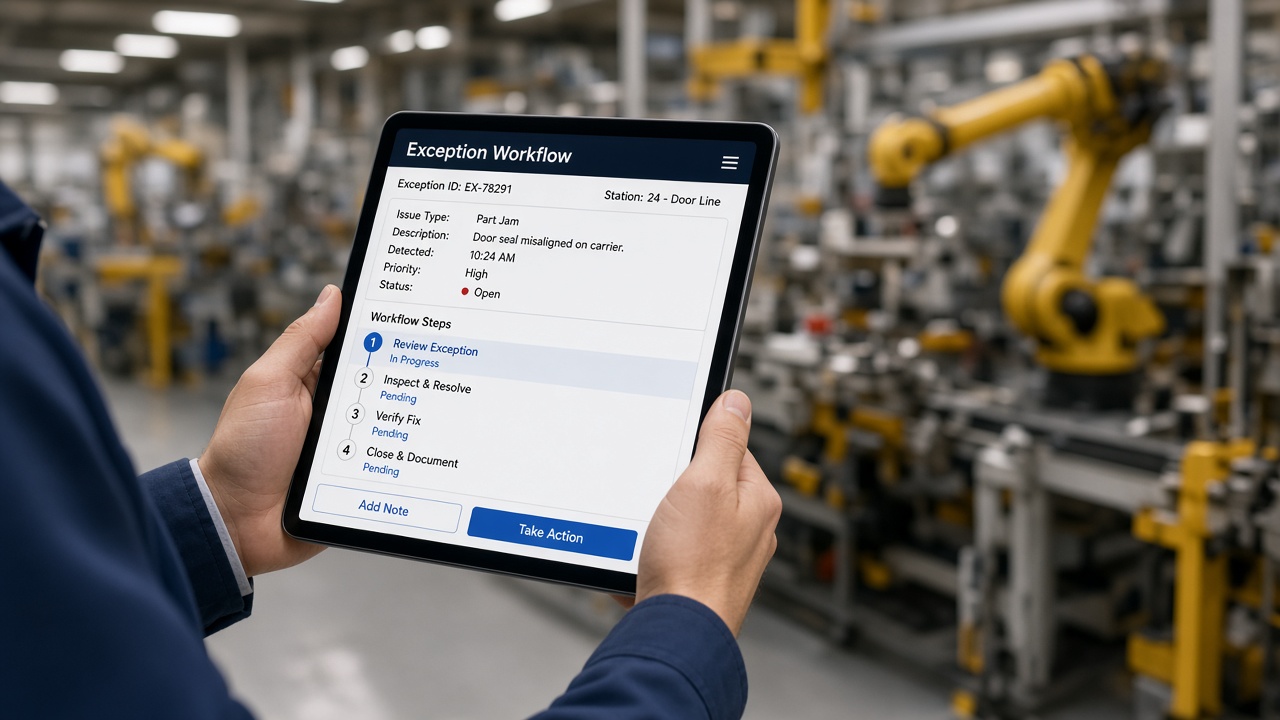
Keep humans on exceptions with full context—who touched what, what failed, and what the next safe step is.
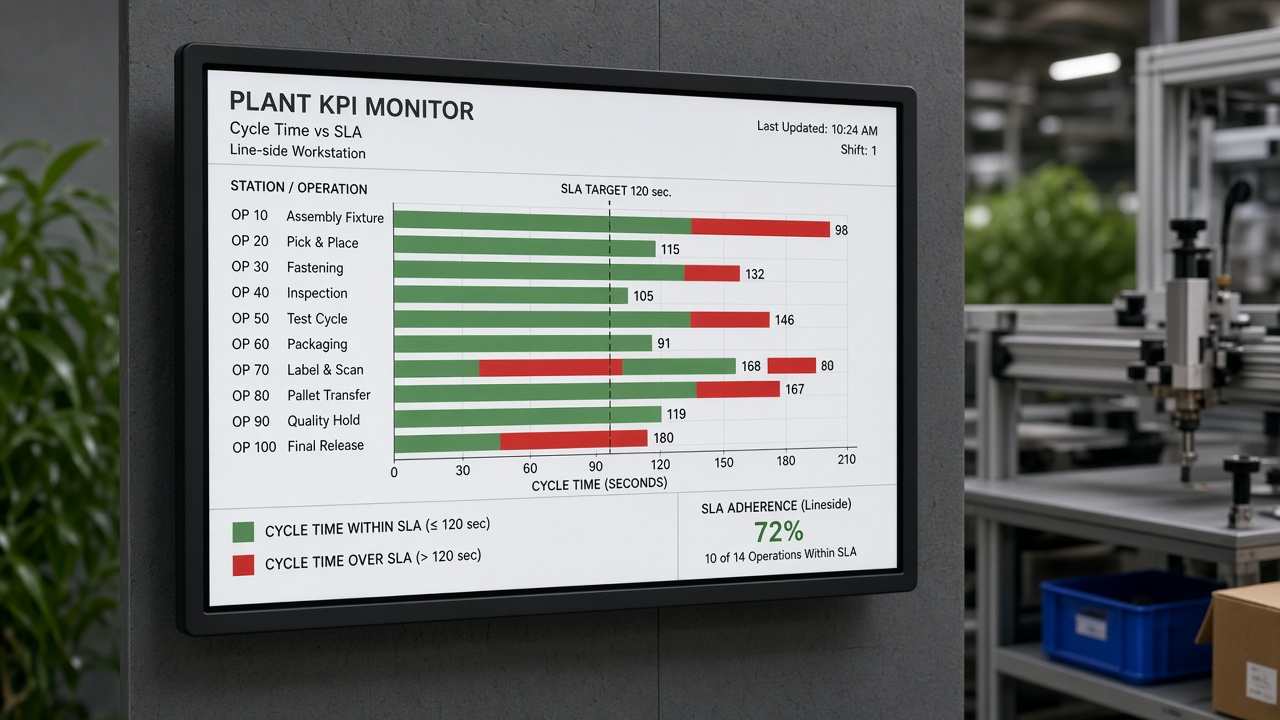
Give ops a single KPI view of throughput and SLA breaches instead of spreadsheet archaeology after every incident.
03 — Friction
Challenges
Systems of record offered only partial APIs. Some steps still required UI automation with careful failure handling.
Shift handoffs historically dropped ownership; any automation had to make the current owner obvious.
Teams lacked a shared definition of done, so “closed” meant different things in quality versus maintenance.
04 — Approach
Solution
We mapped the critical path, then shipped process automation for routing, approvals, and system updates—with exception queues and alerts.
Bot automation covered UI-only steps; APIs handled the rest. Dashboards track cycle time and failure modes so the next automation candidates are ranked by ROI, not vibes.
Playbooks define done criteria per workflow. That shared language stopped tickets from bouncing between teams that thought the other side had finished.
05 — Outcomes
Results
Priority exception workflows moved faster, ownership stayed visible, and leadership finally had a ranked backlog of what to automate next.
- Shorter median cycle time on priority exception workflows.
- Clear owners and audit trails on every automated step.
- A ranked backlog of the next automations by ROI.
06 — Forward
What’s Next
Add agentic AI for multi-step diagnosis suggestions before human dispatch—recommendations only, with humans still owning the final call on the floor.
Ready to ship something similar?
We’ll map scope, risks, and a first production slice in one working session.