Next Gen System builds production chatbots, Voice AI, bot & process automation, agentic systems, OpenAI integrations, and data services—wired to your workflows.
Next Gen System builds production chatbots, Voice AI, bot & process automation, agentic systems, OpenAI integrations, and data services—wired to your workflows.
Service
Automate the critical path—with exceptions handled by people, not ignored.
Built for Ops and transformation leaders who need fewer manual handoffs.
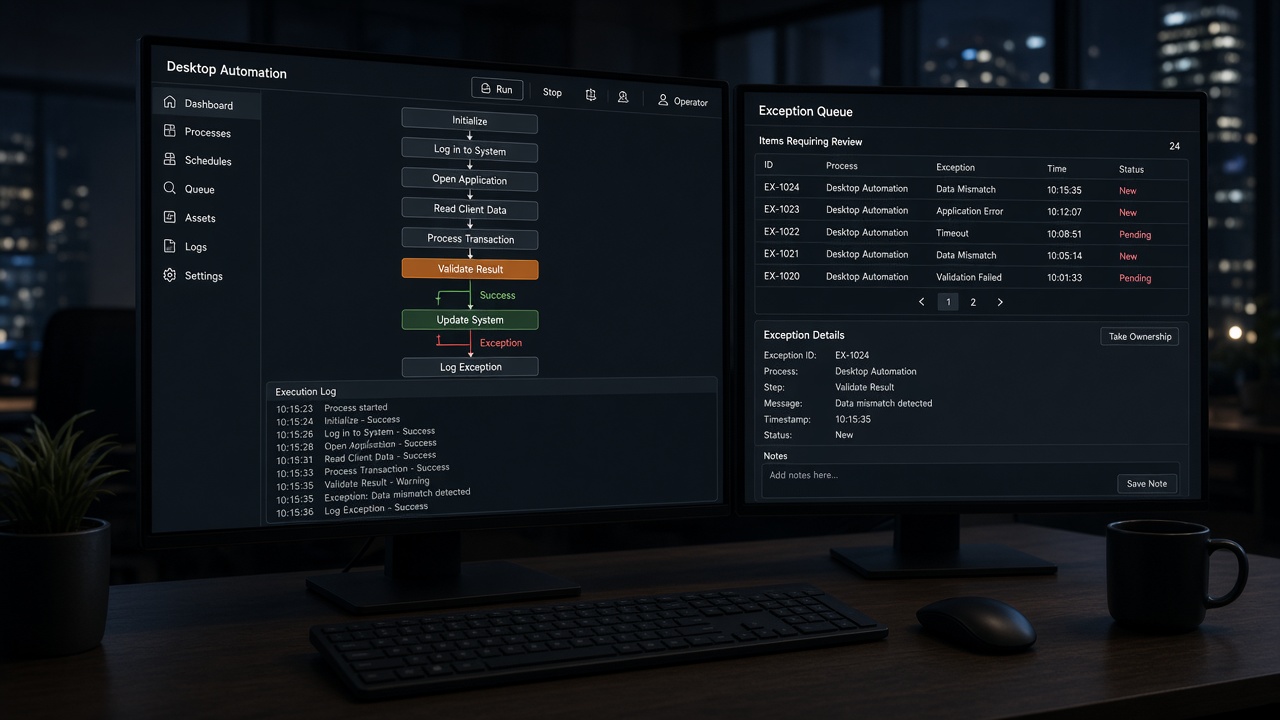
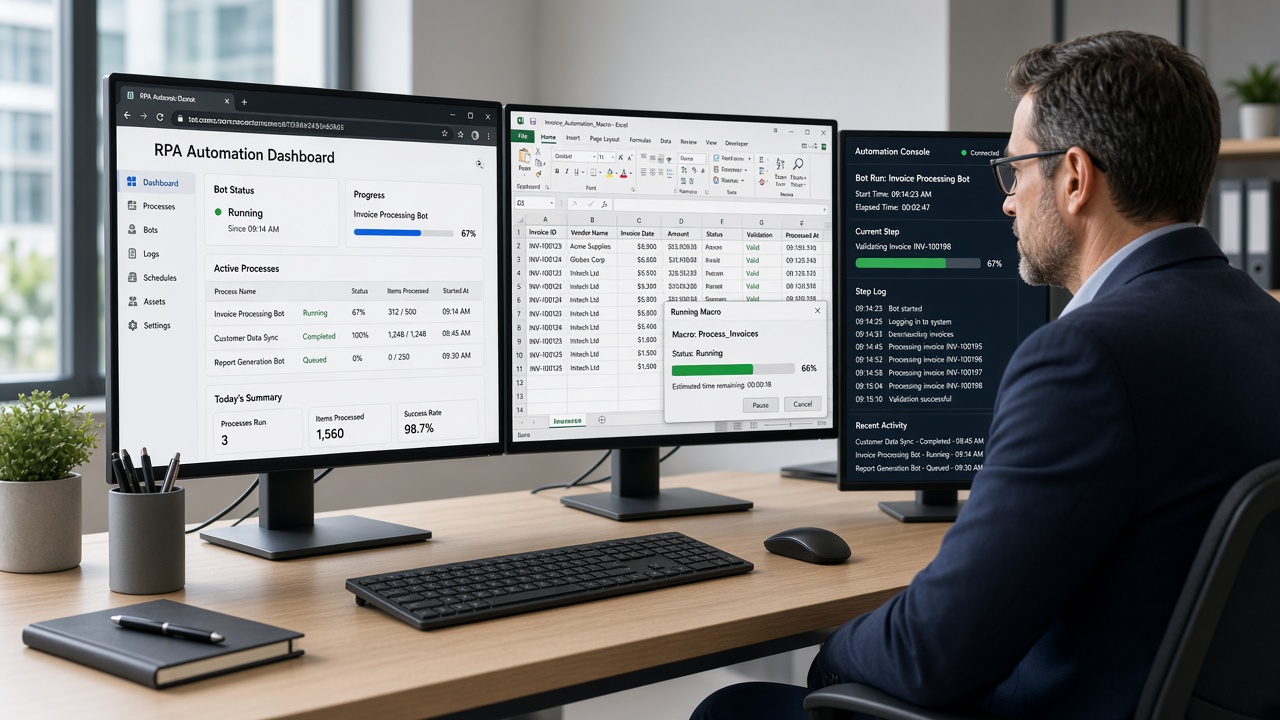
Next Gen System designs process automation that sits in the critical path: intake, routing, approvals, and updates to systems of record. We map the workflow first, then apply rules, RPA, and AI agents where they earn ROI—with monitoring so failures are visible.
Workflow automation that cuts cycle time and handoffs—with human review where it matters.
Project types
Concrete builds we ship under this service—not a generic AI wishlist.
Industries
How this service shows up in each sector—specific jobs, not a generic industry list.
Intake, referrals, and prior-auth packets move through named queues with exceptions routed to the right desk—not lost in email. Staff keep clinical judgment; the workflow carries the context.
View industry HealthcareDevice registrations, lab handoffs, and exception packs follow a fixed path from form to system of record, with a human step only when a field fails a check.
View industry HealthcareAccessioning, result routing, and report follow-ups run as owned jobs so a missed field does not stall the whole bench.
View industry HealthcareRepetitive ops—sample logs, vendor packs, audit folders—run with timestamps and owners so QA can replay what happened.
View industry FinanceApplications, KYC packs, and exception queues move in order. Underwriters see why a file paused instead of hunting across inboxes.
View industry FinanceMerchant onboarding, reconciliation breaks, and status updates run as jobs with retry and an owner when a match fails.
View industry More industriesShop-floor and desk workflows—order changes, quality holds, spare-part requests—route with a clear next step and an audit trail.
View industry More industriesBooking, exception, and POD updates flow across TMS and carrier portals so ops is not copying the same status twice.
View industry More industriesActivation, ticket triage, and field-job updates follow a defined path with handoff notes when a human has to take over.
View industryWhy it matters
Next Gen System treats process automation as a production system—scoped outcomes, owned integrations, and measurable quality from day one.
Most automation fails when teams script screens before they redesign the workflow. Next Gen System maps the process, picks high-ROI steps, then ships durable automation with monitoring.
You get shorter cycle times, cleaner audit trails, and a backlog of the next automations—not a brittle bot farm.
In practice, teams use this engagement to fewer manual handoffs and status chases, clear audit trails for regulated steps, automation tied to cycle-time and error kpis, and safe human-in-the-loop for exceptions.
Most stalled programs share the same friction: unclear ownership after a pilot, and brittle scripts without monitoring. Later, no evaluation of quality or roi, and integrations treated as an afterthought tends to show up if ownership is unclear.

Outcomes & deliverables
Concrete results and artifacts—so stakeholders know what “done” looks like before build starts.
Business outcomes
You receive
How we structure the work
Each workstream is a chapter of delivery—not a checklist item. Together they move you from scoped intent to owned production.
Approvals, routing, and status updates across systems of record.
Deterministic rules where possible; models for classification and extraction.
Human review paths with full context for edge cases.
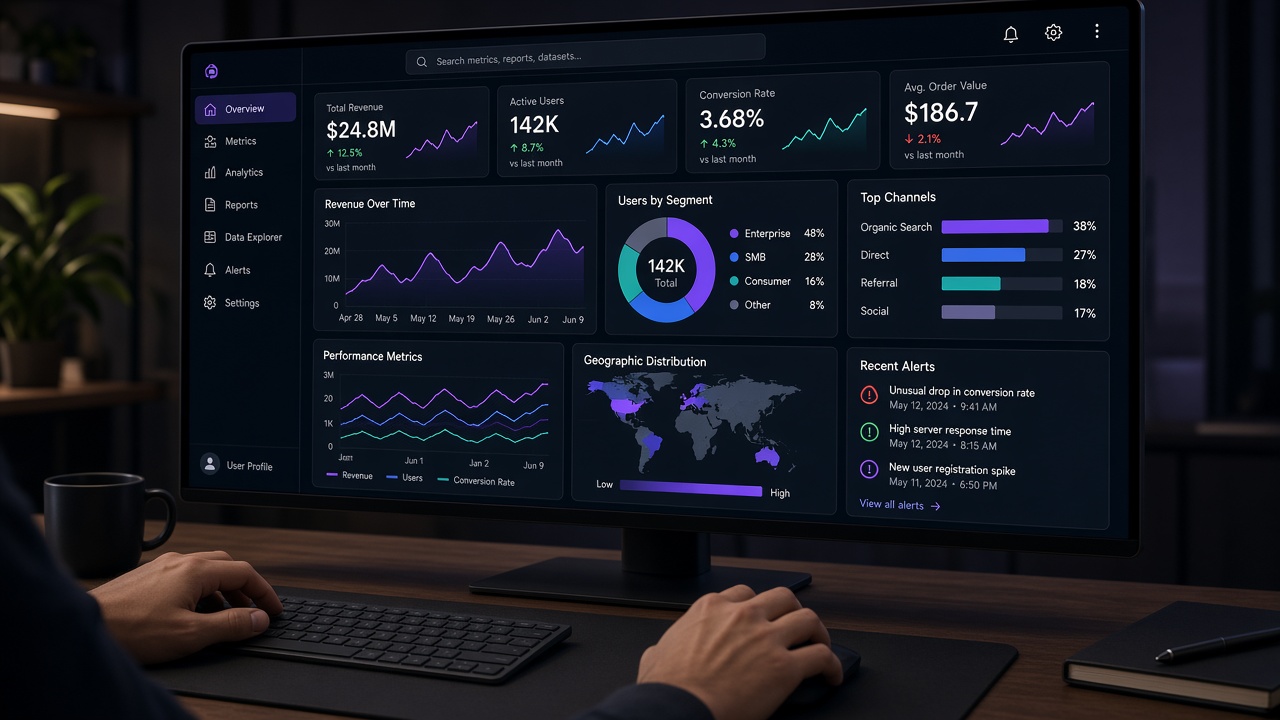
Dashboards for throughput, failures, and SLA breaches.
Business impact
Cycle-time reduction on priority processes. Exception queues with clear owners. Logged, auditable automation runs. A prioritized automation roadmap.
You leave with process map and automation blueprint, production workflows / bots / agents, exception queues and alerts, and ops runbook and kpi dashboard—assets your operators can run without another consulting cycle.
Typical stack choices include Workflow engines, RPA, APIs, Queues, and Monitoring—selected for your compliance, latency, and ownership needs rather than a fixed tool wishlist.
We scope the win, build with evals, and hand over a system your team can run.
We map high-ROI chatbot, voice, automation, or data use cases—then pick the first win that can reach production.

We design the system, integrate your stack, and prove quality with evals before wider rollout.
We ship with monitoring, feedback loops, and a clear runbook so your team can own the system.
Good fit
Not a fit
FAQ
Straight answers for evaluating Process Automation with Next Gen System.
We prefer APIs when available; RPA when the UI is the only interface—and we document the tradeoffs so you know maintenance cost before go-live.
Alerts, retries, and human queues—never silent failure. Every critical run is logged with an owner and recovery path.
Yes. Most clients start with one lighthouse workflow, prove cycle-time and error gains, then scale the same pattern.
A focused first process is usually weeks, not quarters—timeline depends on system access, policy reviews, and exception design.
We hand over runbooks, dashboards, and named owners. Optional retainers cover monitoring and the next backlog items.
Yes if APIs or supported connectors exist. Discovery maps system of record access before we commit to scope.
Related
Share your use case. We respond within one business day.