Next Gen System builds production chatbots, Voice AI, bot & process automation, agentic systems, OpenAI integrations, and data services—wired to your workflows.
Next Gen System builds production chatbots, Voice AI, bot & process automation, agentic systems, OpenAI integrations, and data services—wired to your workflows.
Service
Maintainable scrapers with monitoring—not disposable scripts.
Built for Teams that need reliable external web data on a schedule.
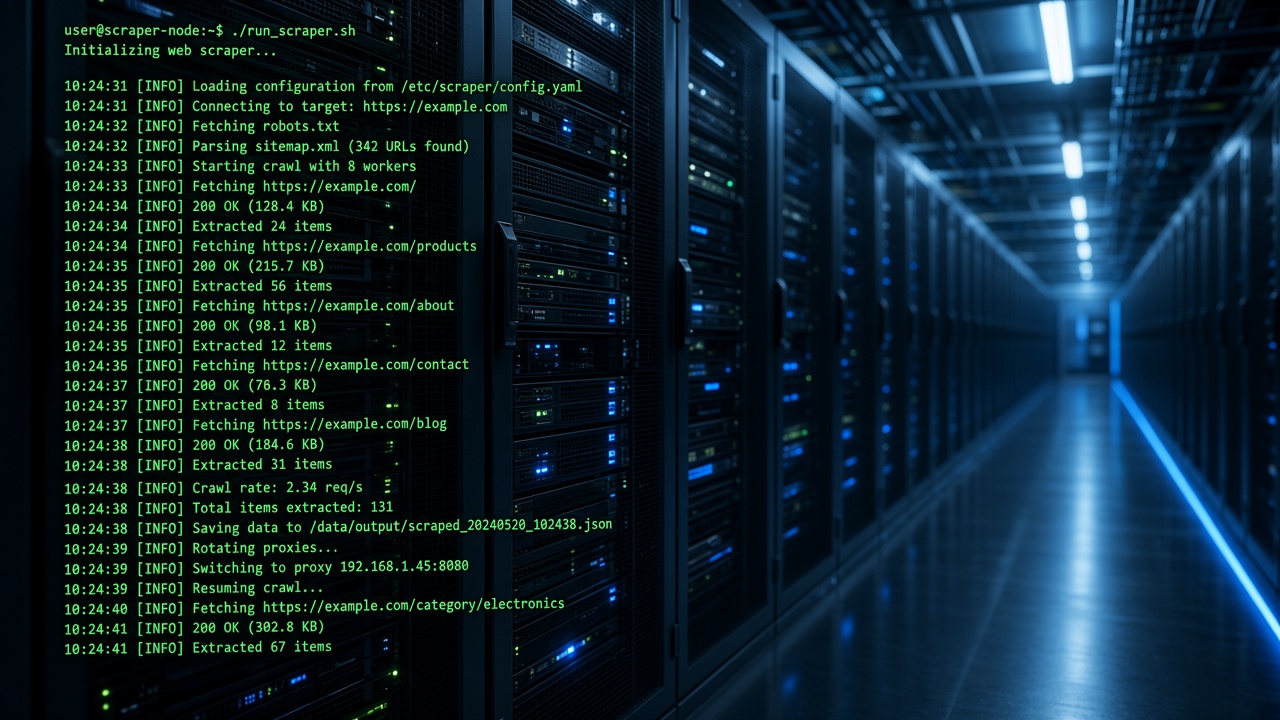
Next Gen System builds web scraping systems that stay maintainable: schedulers, proxies where appropriate, change detection, and clean structured outputs. We design for ethics, robots policies, and legal review—not brittle one-off scripts.
Reliable, respectful web data collection pipelines for research, pricing, and enrichment.
Project types
Concrete builds we ship under this service—not a generic AI wishlist.
Industries
How this service shows up in each sector—specific jobs, not a generic industry list.
Rate, competitor, and public-filing collection runs on a schedule with change detection—feeds you can actually load, not a one-off scrape.
View industry FinanceResearch collection from allowed public sources lands structured, deduped, and timestamped for the desk—not a folder of HTML.
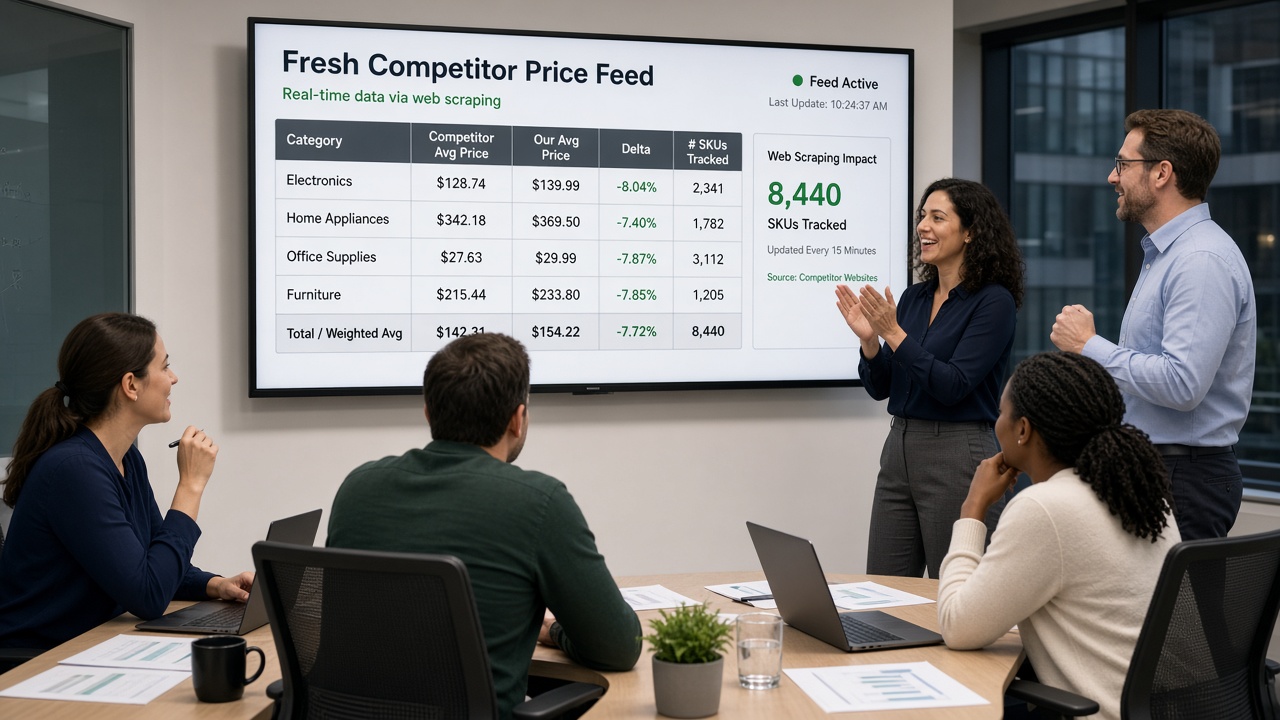
View industry More industriesCompetitor and catalog feeds stay current so pricing and ranging decisions are not a week late.
View industry More industriesSupplier and parts pages that have no API still become structured inputs, with alerts when a layout break would silently starve the feed.
View industryWhy it matters
Next Gen System treats web scraping as a production system—scoped outcomes, owned integrations, and measurable quality from day one.
Web data projects die when sites change and nobody is paged. We build collectors with schemas, validation, and repair playbooks—and we respect legal and robots constraints.
In practice, teams use this engagement to structured data on a schedule, change alerts when sites break, deduped, validated outputs, and clear ownership and runbooks.
Most stalled programs share the same friction: unclear ownership after a pilot, and brittle scripts without monitoring. Later, no evaluation of quality or roi, and integrations treated as an afterthought tends to show up if ownership is unclear.
Outcomes & deliverables
Concrete results and artifacts—so stakeholders know what “done” looks like before build starts.
Business outcomes
You receive
How we structure the work
Each workstream is a chapter of delivery—not a checklist item. Together they move you from scoped intent to owned production.
Crawlers/scrapers per source family.
Schema checks and anomaly flags.
Warehouse, API, or files.
Schedules, proxies policy, repairs.
Business impact
Scheduled structured feeds. Breakage alerts. Clean, deduped datasets. Documented compliance posture.
You leave with source list and field schema, scrapers / crawlers in production, storage and delivery (api, warehouse, files), and monitoring and repair playbooks—assets your operators can run without another consulting cycle.
Typical stack choices include Crawlers, Queues, Proxies (if approved), and Warehouse—selected for your compliance, latency, and ownership needs rather than a fixed tool wishlist.
We scope the win, build with evals, and hand over a system your team can run.
We map high-ROI chatbot, voice, automation, or data use cases—then pick the first win that can reach production.

We design the system, integrate your stack, and prove quality with evals before wider rollout.
We ship with monitoring, feedback loops, and a clear runbook so your team can own the system.
Good fit
Not a fit
FAQ
Straight answers for evaluating Web Scraping with Next Gen System.
It depends on targets and jurisdiction. We work with your counsel and refuse clearly non-compliant asks.
Monitors flag schema breaks; we repair collectors from a playbook instead of discovering stale data weeks later.
Yes—warehouse tables, APIs, or files on a schedule you own, with validation before load.
With approved rate limits, caching, and proxy policy only when your counsel and vendor terms allow it.
When you provide lawful credentials and access policy. Secrets stay vaulted; sessions are monitored.
Cadence is part of scope—hourly, daily, or event-driven—tied to your SLA and source fairness.
Related
Share your use case. We respond within one business day.